


While there are many steps that take place in a municipal wastewater treatment plant, the final step in the process is inactivation. Inactivation is required to reduce microorganisms in the wastewater before it’s discharged into a receiving body of water. These microorganisms are typically microbes that may cause disease in humans when they come into contact with local bodies of water while swimming, fishing or taking part in other recreational activities. This is why it is crucial for wastewater to be treated before it is discharged back into a lake or river.
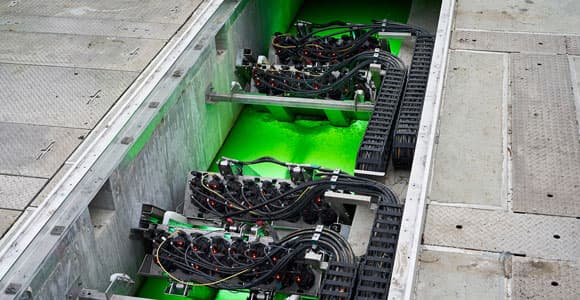
With growing awareness of potential long-term negative impacts and generation of toxic by-products caused by chemical wastewater treatment, the creation of alternative treatments, like UV is becoming increasingly popular. UV wastewater treatment systems can treat municipal drinking water and wastewater to ensure communities meet their water quality goals.
UV light is a form of light that is invisible to the human eye. It occupies the portion of the electromagnetic spectrum between X-rays and visible light and is uniquely able to inactivate microorganisms such as E.Coli and Fecal Coliforms. This capability has led to widespread adoption of UV light as a highly effective way to treat wastewater and drinking water.*
Microorganisms are inactivated by UV light when nucleic acids are damaged. When nucleic acids are exposed to certain wavelengths of UV light via UV lamps, they are instantly unable to reproduce. If a microorganism can’t reproduce, it is unable to cause infection. UV light has proven efficient in inactivating a variety of different microorganisms, including the ones responsible for cholera, polio, typhoid, hepatitis, along with other diseases.*
UV light is also effective at inactivating Cryptosporidium and Giardia, two microbes that chlorine is unable treat. Treating these two chlorine-resistant microbes is extremely important as they are often found in bodies of water that communities use as a source of drinking water and for recreational use.
* An Introduction to UV Treatment for Municipal Wastewater eBook by Trojan Technologies (February 2024)
Discover an easy tool to help you understand the operating expense of a UV system.
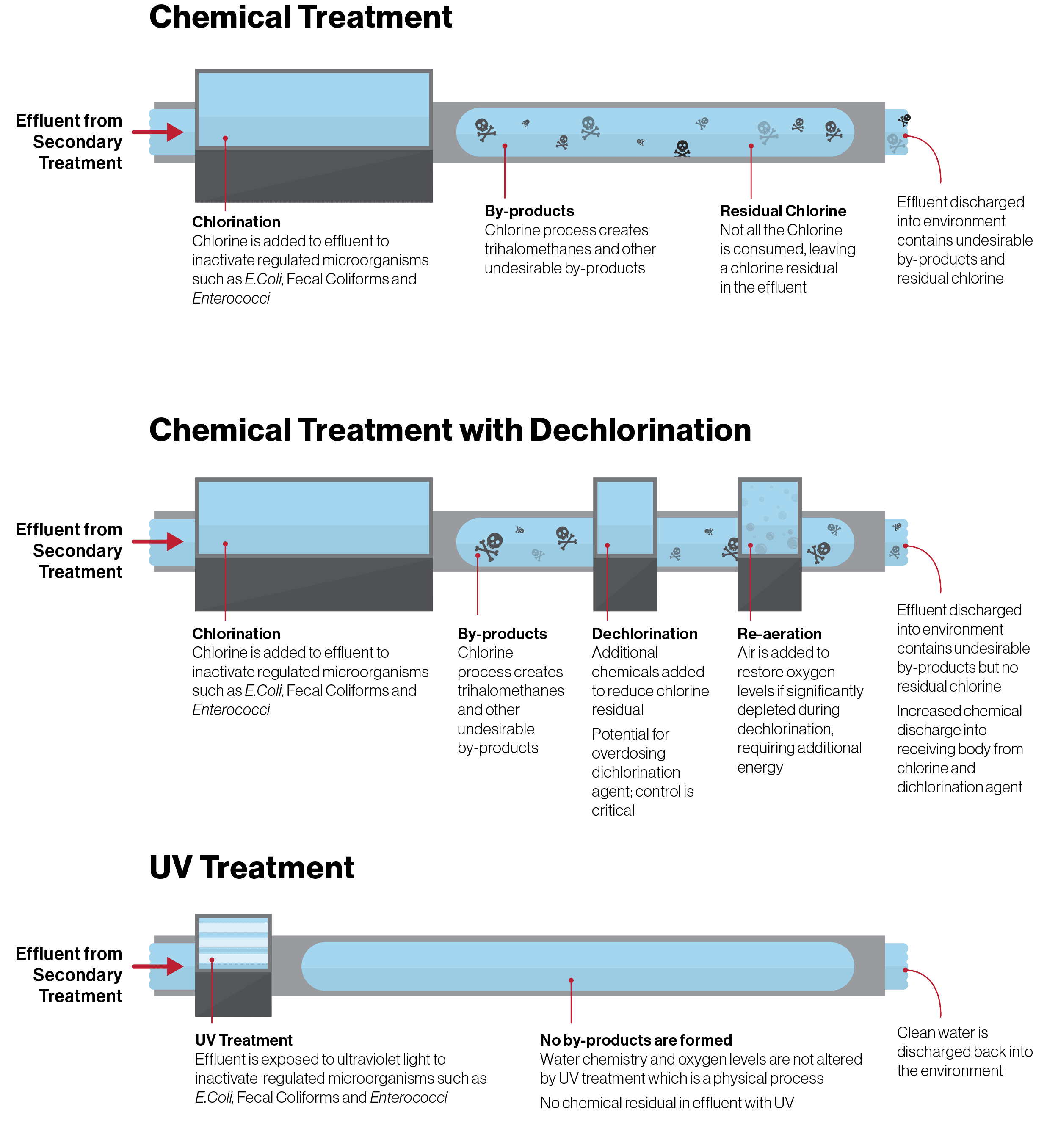
Chlorine was initially introduced to treat municipal wastewater because it was able to reduce microbes that had the potential to cause illness in humans. However, limits on the levels of chlorine discharged in treated wastewater were introduced in 1976 because residual chlorine is toxic to plant and animal life. These regulations accelerated the development and adoption of UV for tertiary treatment of wastewater since it produces no by-products and inactivates Cryptosporidium and Giardia.
Chlorine Treatment | UV Treatment | |
|---|---|---|
No Treatment By-products (DBP’s) | 🞫 | ✔ |
No Chemical Residue | 🞬 | ✓ |
No Chemical Spill Risk | 🞫 | ✔ |
Effective Against Cryptosporidium and Giardia | 🞬 | ✓ |
Well-Suited for Changing Regulations | 🞫 | ✔ |
When a wastewater treatment plant uses chlorine in the tertiary treatment of wastewater, a reducing chemical can be used to help dechlorinate the wastewater. Precise dosing and control of the reducing chemical is extremely important to protect plant and animal life – but this takes time and a great deal of vigilance.
UV treatment of wastewater takes place in seconds, reducing the physical footprint and capital costs of installing a UV system.
Reach out to one of our specialists via the form below or read our brand-new Wastewater eBook.
case studies and resources
eBook: Intro to UV Wastewater Treatment
An eBook to give you the information you need to know about UV treatment for municipal wastewater. It’s chock-full of insight and answers many frequently asked questions.
Upgrading a UV System in Washington State
Learn why a wastewater treatment plant in Washington stopped using chlorine to treat their wastewater and transitioned to using UV instead.
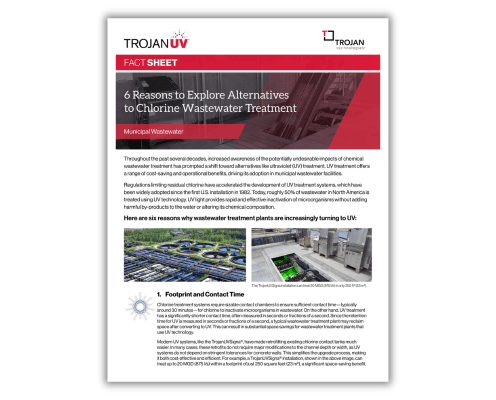
6 Reasons to Explore Chlorine Alternatives
Discover the top six reasons why wastewater treatment plants are increasingly converting to UV treatment.

TrojanUVSigna
An innovative UV wastewater treatment system that reduces total cost of ownership while drastically simplifying operation and maintenance.
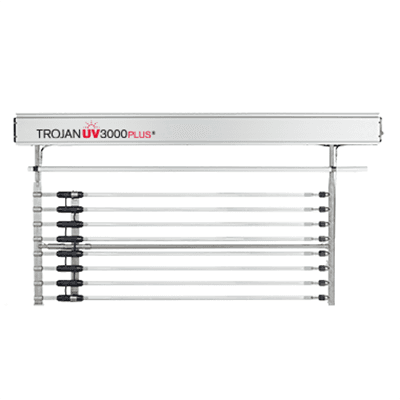
TrojanUV3000Plus
A preferred UV treatment system, delivering proven, reliable performance worldwide across primary and tertiary wastewater, and reuse applications.
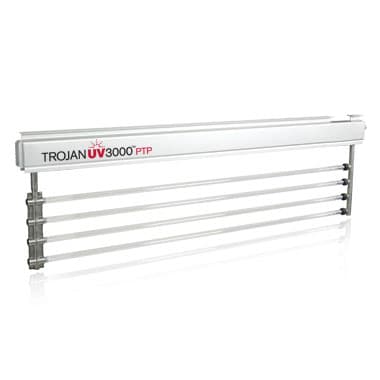
TrojanUV3000PTP
A pre-engineered UV system that enables quick, inexpensive installation and is an ideal solution for small wastewater treatment plants.
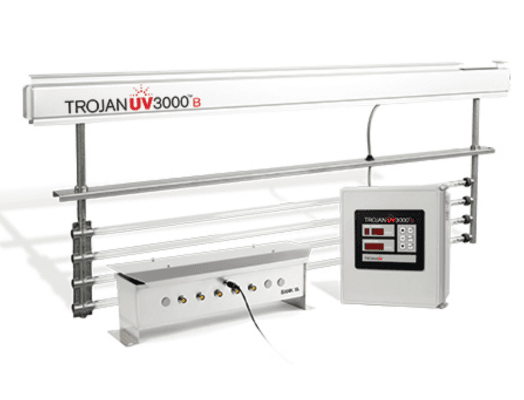
TrojanUV3000B
A simple yet robust UV wastewater treatment system that requires minimal operator involvement due to its modular design and proven components.
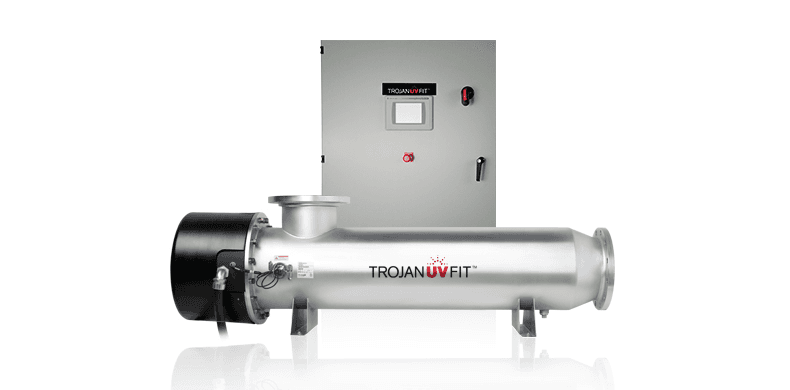
TrojanUVFit
A UV wastewater treatment system specifically designed for sites that produce filtered effluent and prefer an in-pipe/closed-vessel UV chamber.
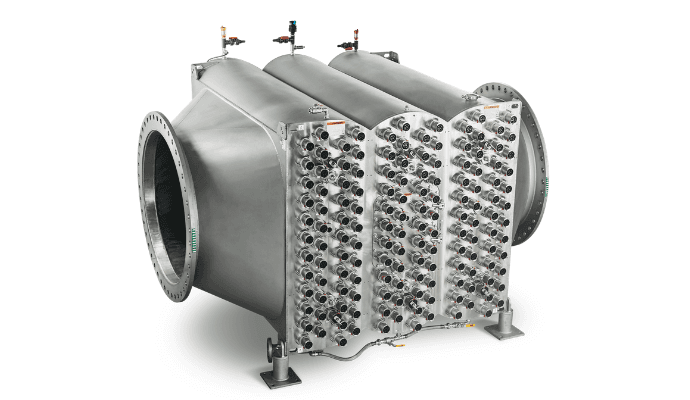
TrojanUVFlex - Wastewater
A compact and efficient UV system for non-potable reuse and other wastewater applications where treatment of filtered tertiary effluent is required.
Have questions?
Call us at 1 (888) 220-6118 or complete the form below.
Inactivation Claims *Specific UV systems manufactured by Trojan Technologies have been validated through microbial testing. Through this testing, performance data has been generated for UV dose delivery to inactivate Escherichia coli (E. coli), fecal coliform, Poliovirus, Cryptosporidium, Giardia, and Adenovirus. For a detailed list of UV systems and target organisms, visit this page.

Aria Filtra offers innovative filtration solutions for municipal wastewater treatment, designed to help communities manage and reclaim water resources with efficiency and reliability.
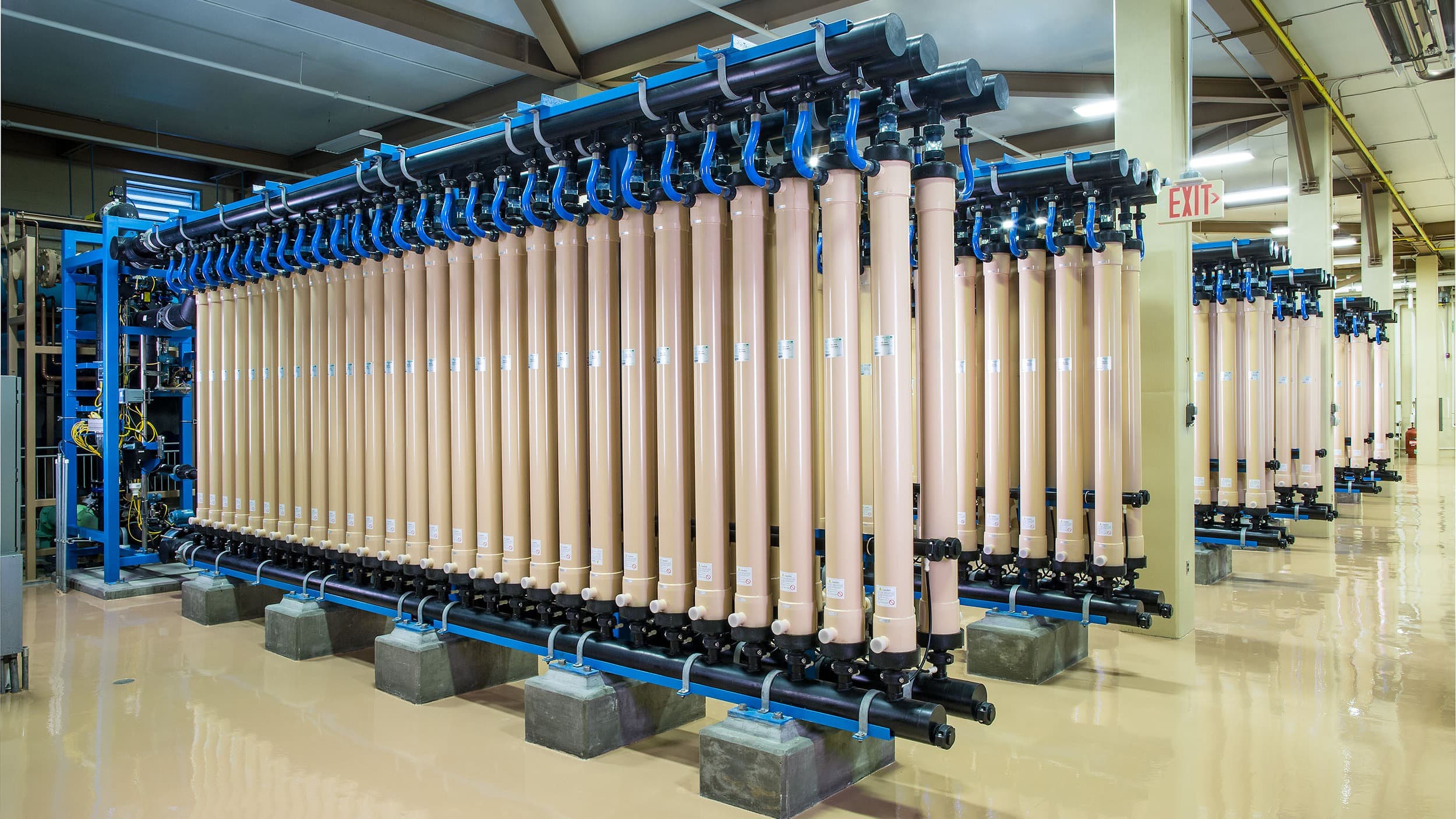
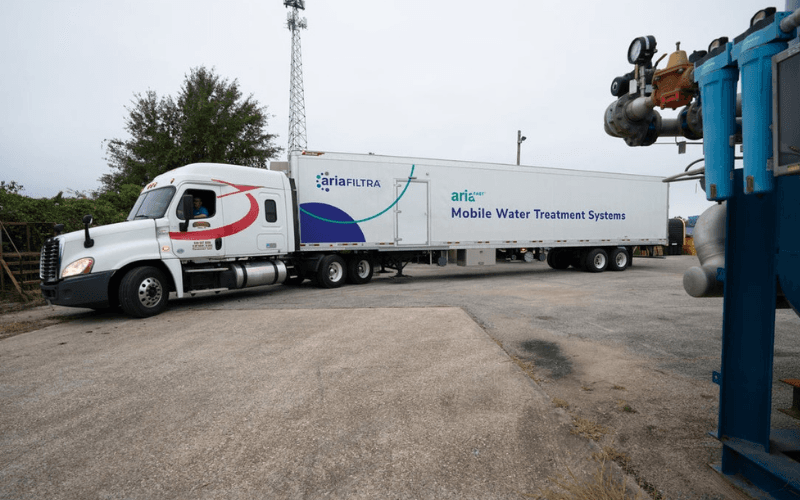
Our membrane-based systems, including microfiltration (MF) and reverse osmosis (RO), are engineered to handle a wide range of wastewater conditions, reducing suspended solids, organic matter, and other contaminants with precision. Aria Filtra’s technologies are trusted for their long-term performance, minimal maintenance, and adaptability to both centralized and decentralized treatment facilities. Whether through modular Aria FIT™ systems, mobile Aria FAST™ units, or fully customizable Aria FLEX™ configurations, municipalities can enhance treatment outcomes, meet regulatory requirements, and support sustainable water management with Aria Filtra’s proven expertise.
case studies
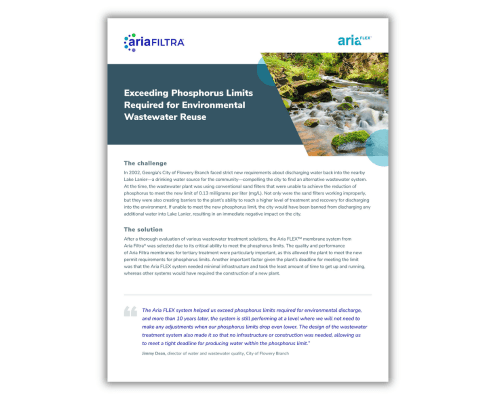
Advanced Phosphorus Control
In 2002, Georgia’s City of Flowery Branch faced strict new requirements about discharging water back into the nearby Lake Lanier, which is a drinking water source for the community, compelling the city to find an alternative wastewater system.
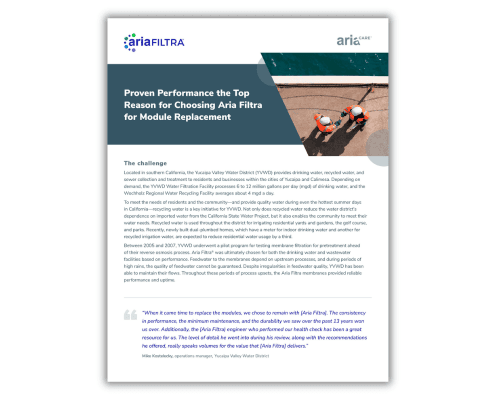
Reliable Membrane Performance
The Yucaipa Valley Water District tested membrane filtration for pretreatment ahead of their reverse osmosis process. Learn why Aria Filtra was chosen for both the drinking water and wastewater facilities based on performance.
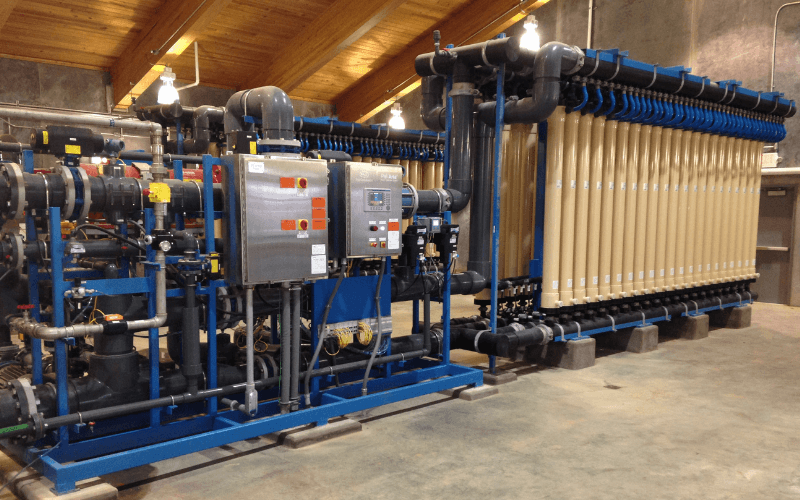
Aria FIT MF/UF Systems
Packaged water solutions that fit your project schedule, footprint, and budget.
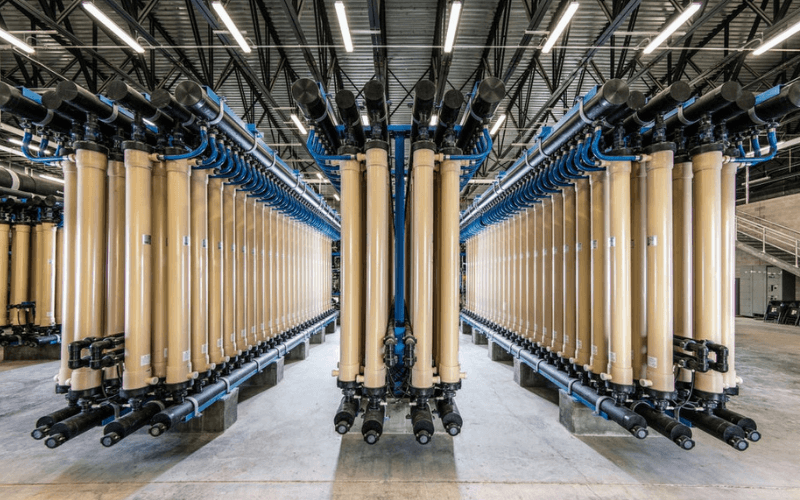
If you're looking for reliable and durable filtration solutions that enable mission-critical functions to work as needed, you've come to the right place.
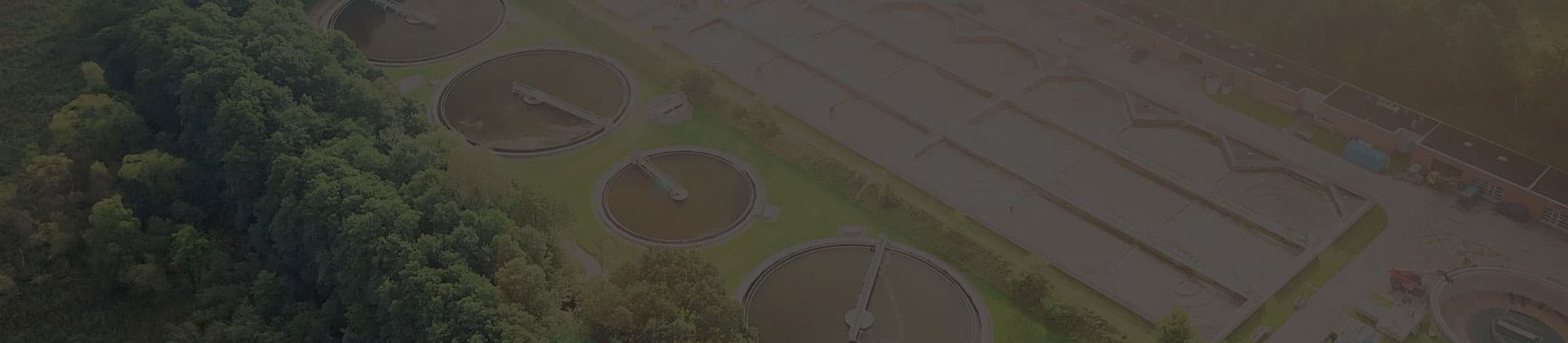
Harness the power of TrojanUV and Aria Filtra to ensure safer, cleaner wastewater treatment—protecting communities and the environment

