

About Treating Wastewater for Non-potable Reuse Applications
Recycled wastewater provides a cost-effective, local and sustainable water supply for multiple non-potable uses
Wastewater treatment for non-potable reuse involves a series of well-established biological and physical process steps, including filtration and inactivation of microbiological contaminants
Inactivation of microorganisms in the water is the critical last step in the reuse treatment process
Municipalities in arid regions are acutely aware of the need to conserve their communities' drinking water supplies, and one very effective way to do so is by treating and reusing wastewater. Recycled water can be used or sold for a variety of purposes, including recreational and agricultural irrigation, industrial processes, construction, street sweeping, and more.
UV Protection
UV is an effective way to treat wastewater to meet the stringent limits required for reuse. It inactivates E.coli, Cryptosporidium, and Giardia.
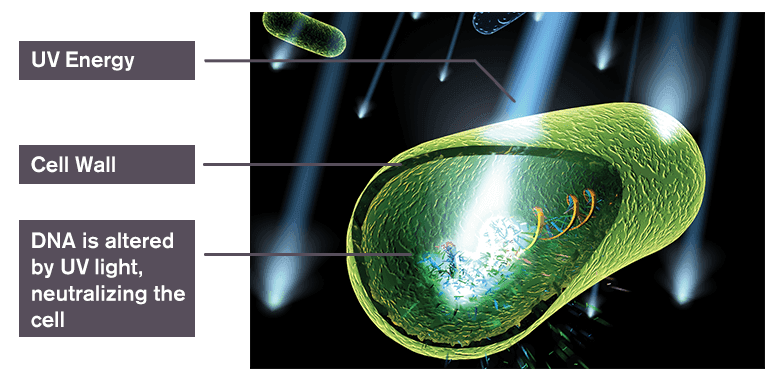
Inactivation by UV is a physical process that rapidly affects microorganisms as they pass by ultraviolet lamps submerged in the water. Within only a few seconds of exposure, the DNA of the microorganisms is permanently altered and they can no longer reproduce or infect those coming in contact with the water.
UV Upgrade for Water Reuse in Ewa Beach, Hawaii
When the Honolulu water recycling facility (WRF) was first constructed, a TrojanUV4000® was installed to help recycle wastewater to Class R-1 reuse standards for various uses such as irrigation. After 15-years, they proactively sought to replace their TrojanUV4000, and selected the TrojanUVSigna® in order to take advantage of TrojanUV Solo Lamp® technology, which reduces both electrical consumption and power costs.
TrojanUV Systems for Non-potable Reuse
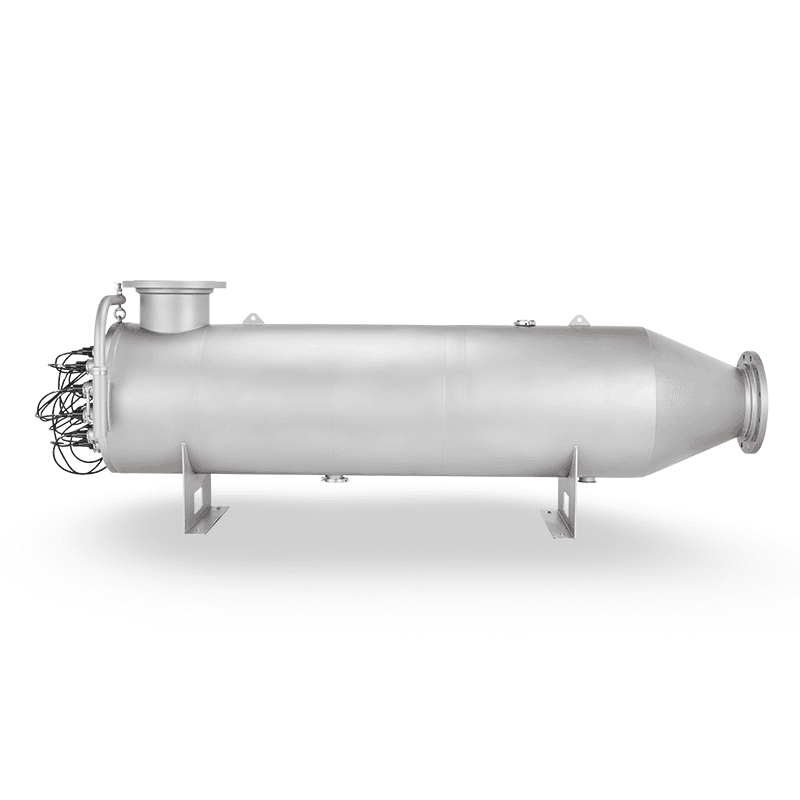
TrojanUVFocus
A flexible UV system optimized for critical non-potable reuse applications while delivering superior efficiency with fewer required lamps for high performance without compromise.
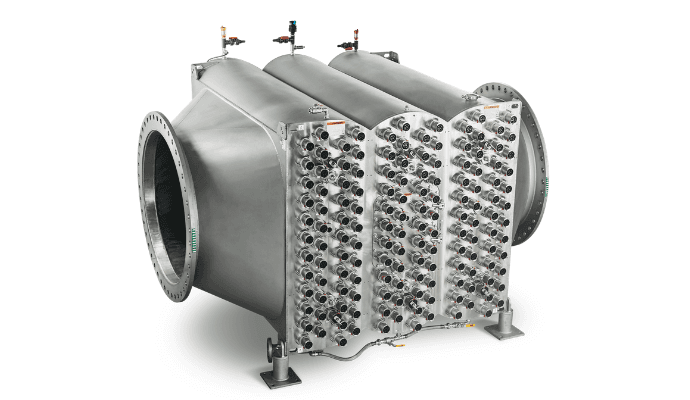
TrojanUVFlex - Wastewater
A compact and efficient UV system for non-potable reuse and other wastewater applications where treatment of filtered tertiary effluent is required.
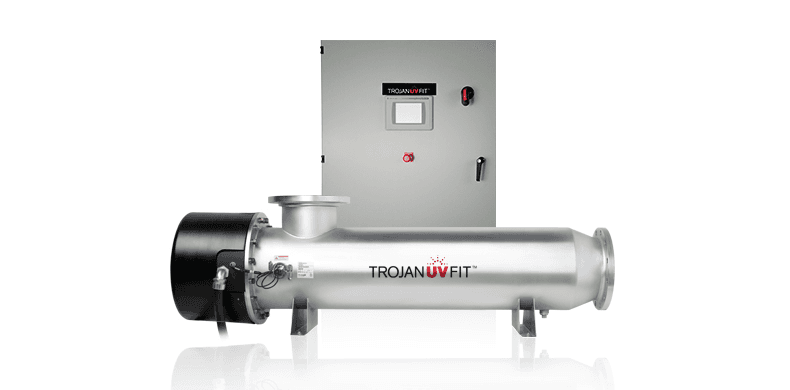
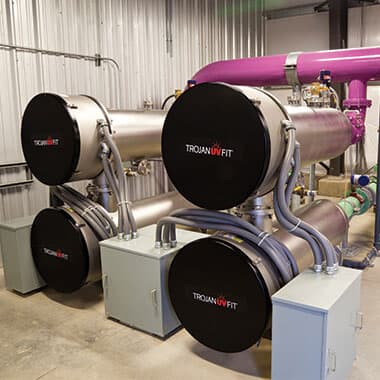
TrojanUVFit
A UV wastewater treatment system specifically designed for sites that produce filtered effluent and prefer an in-pipe/closed-vessel UV chamber.
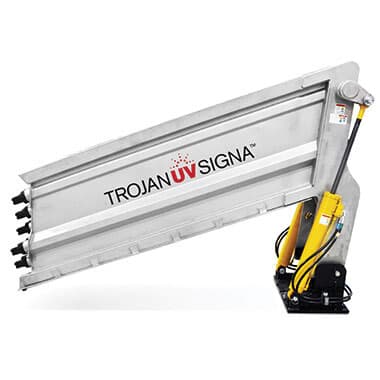
TrojanUVSigna
An innovative UV wastewater treatment system that reduces total cost of ownership while drastically simplifying operation and maintenance.
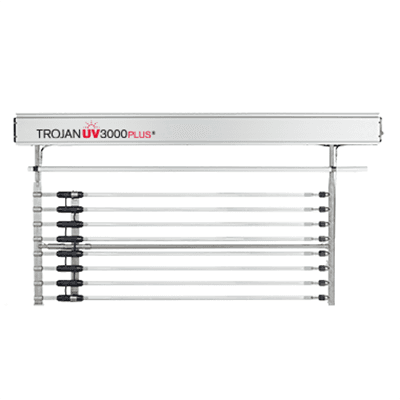
TrojanUV3000Plus
A preferred UV treatment system, delivering proven, reliable performance worldwide across primary and tertiary wastewater, and reuse applications.
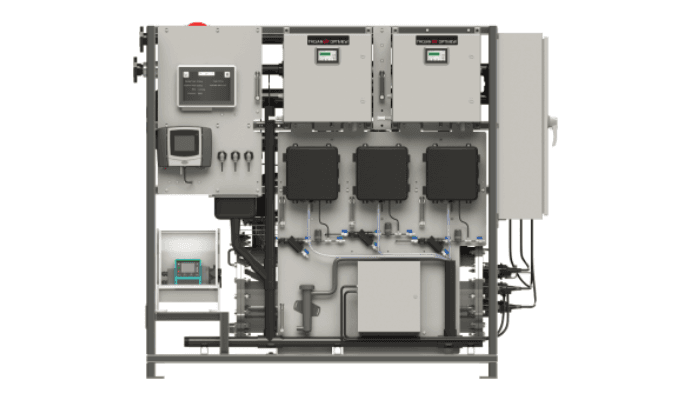
TrojanUV AOP Demonstration System
A fully packaged UV AOP system with oxidant and instrumentation options designed for demonstration, feasibility, and piloting work.