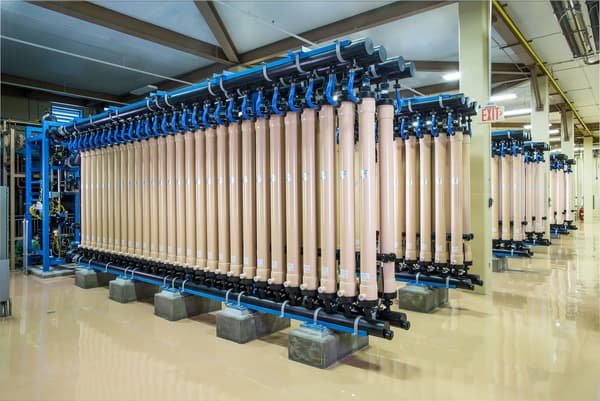


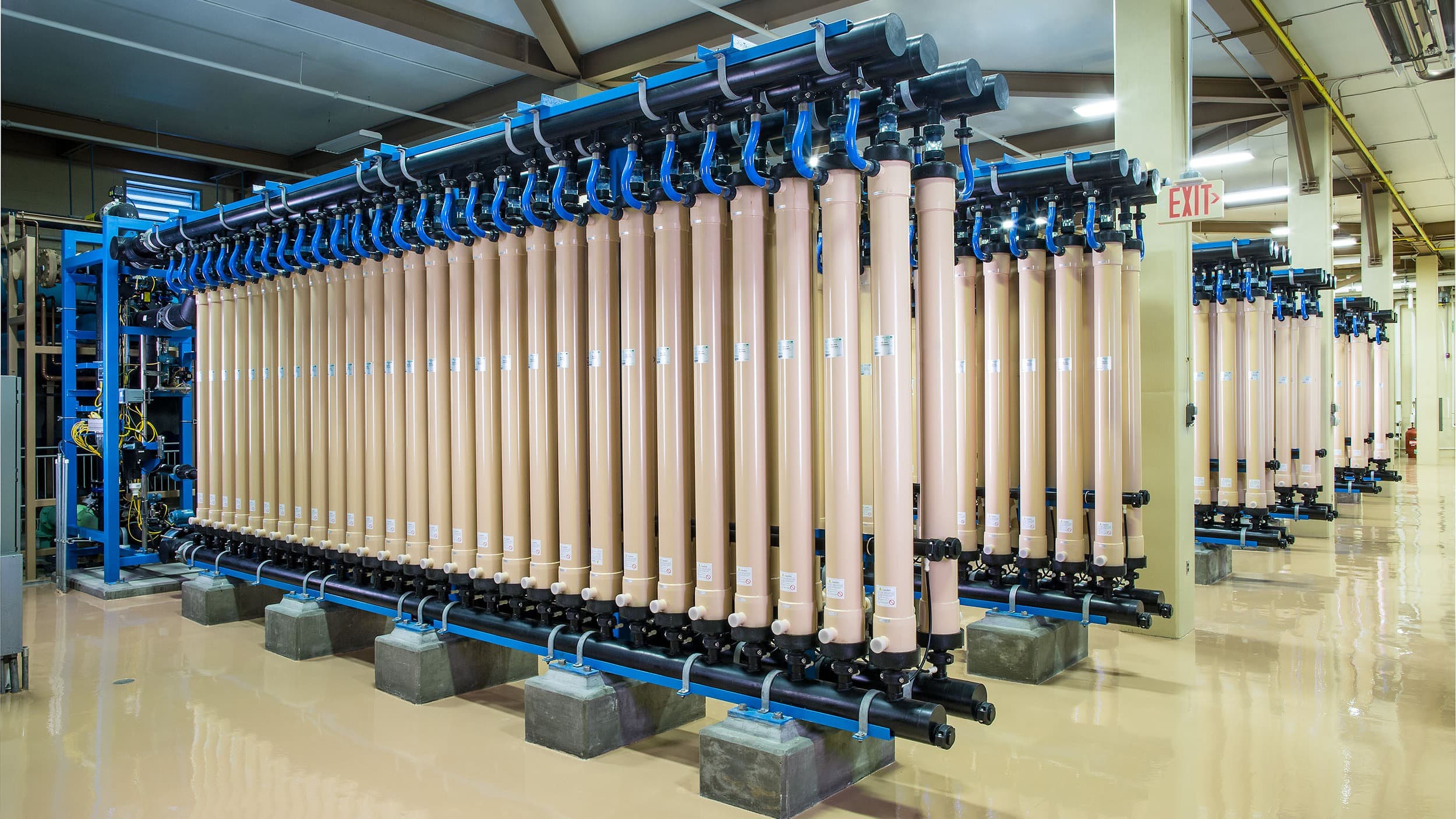
In today’s competitive landscape, total cost of ownership (TCO) has become a critical criterion for evaluating membrane systems. Rather than focusing solely on upfront costs, stakeholders are prioritizing factors such as system lifespan, cleaning frequency, operational uptime, and replacement requirements. This shift has elevated the importance of performance guarantees, comprehensive warranties, and robust service support in procurement decisions. This paper presents three case studies that illustrate the longevity and sustained performance of Aria Filtra’s (formerly Pall Water) Membranes.
The first case study highlights the Quinn's Junction Water Treatment Plant (QJWTP) in Park City, Utah, where our membranes have been in use for over 16 years in a direct coagulation microfiltration system. This plant treats surface water with moderate to high turbidity, TOC, and high hardness, using a 10-ppm coagulant dose. After 10 years of stable membrane performance, the customer proceeded with a module autopsy which revealed inorganic foulants. Following Aria Filtra’s recommendation, a high-strength CIP was performed, yielding positive results. The plant also implemented sedimentation control and pH depression. The customer’s proactive detection of foulants allowed for timely corrective action, maintaining stable membrane performance and high membrane integrity with minimal fiber breaks.
The second case study, located in Basalt, Colorado, showcases membrane longevity of 22 years with only two instances of fiber pinning. The plant treats spring water (GWUDI), which has low levels of TOC, TSS, and turbidity. There is no pretreatment prior to the microfiltration system. The facility has a maximum capacity of 0.5 MGD, which operates based on demand. For the past 22 years, regular chlorinated backwashes and annual CIP procedures have significantly contributed to the extended lifespan of the membranes.

Article: Unlocking Membrane ROI: Proven Strategies for Performance, Longevity, and Smarter Bid Decisions
For the third case study, located in Missouri City, Texas, a proactive maintenance strategy significantly extended the life of our membranes to 10-13 years. Treating challenging surface water from a river with high TOC, hardness, and iron, the plant consistently followed best practices, including routine maintenance cleans, standard CIPs, and routine module autopsies. After five years, the module autopsy findings prompted operational adjustments such as setpoint optimization during turbidity spikes, dual-side maintenance cleans, and a one-time high-strength CIP. These measures restored permeability to ~98%, demonstrating the effectiveness of early intervention and ongoing maintenance.
These case studies highlight how optimized operations and cleaning strategies extend membrane life, reduce replacement costs, and lower the need for fiber pinning, resulting in savings on modules, maintenance, and labor. These insights provide valuable guidance for engineers and decision-makers when assessing microfiltration system bids.
Flexible, customizable solutions
Custom Water Systems offer flexible designs for a wide range of capacities and applications. Our modular membrane-based systems are completely customizable, making them the perfect solution for new plants, replacements or facility upgrades.