


About Pesticides
Many pesticides are carcinogenic to animals and, for this reason, are likely human carcinogens (for example, the pesticides alachlor, dieldrin, and DBCP are each classified under the United States Environmental Protection Agency (USEPA) designation “probable human carcinogen")
The most common way to classify pesticides is by the target organism, such as herbicides (weed control), fungicides (fungi control) and insecticides (insect control)
Some pesticides don’t easily degrade, so they can stay in the environment for long periods of time, making their way into streams, rivers & lakes by agricultural runoff, or percolating through soil into groundwater
The use of pesticides to control unwanted pests dates back hundreds of years. Early pesticides were mainly inorganic chemicals such as calcium arsenate or lead arsenate, which are both now banned in the United States. Modern science has since produced hundreds of synthetic organic chemicals for use as pesticides.
In fact, approximately 900 active pesticide ingredients are registered in the United States for use in nearly 20,000 pesticide products.
Pesticide Regulations in Drinking Water
In the U.S., pesticides are regulated in two primary ways. First, each pesticide must be registered under the Federal Insecticide, Fungicide, and Rodenticide Act (FIFRA). This Act establishes a regulatory system for controlling the sale, distribution and application of pesticides. Second, the USEPA has issued National Primary Drinking Water Regulations (Maximum Concentration Levels, or MCLs) for over twenty pesticides, including atrazine (3 parts per billion [ppb]), alachlor (2 ppb), and dibromochloropropane (DBCP, 0.2 ppb).
Treating Pesticides With The UV Advanced Oxidation Process
Conventional water treatment technologies such as chlorination, coagulation and filtration do little to remove pesticides from water. Other technologies, such as carbon adsorption and ozonation are feasible but costly in largescale treatment applications. Ozone treatment can also form harmful by-products such as bromate.
UV AOP is a highly cost-effective solution for treating pesticides. The process uses UV light, along with an oxidant, to break down pesticide molecules into their elemental components. It can also simultaneously perform treatment to obtain log reduction credits for microorganisms. UV AOP creates no residuals and occurs instantaneously within the UV chamber, eliminating the need for the large concrete contact basins associated with ozone.
UV in Action
Metaldehyde Removal from the River Trent in the United Kingdom
In the UK, metaldehyde protects farmland by controlling the spread of slugs and snails. Several wet autumns necessitated an increase in its use, which led to the pesticide leaching into water bodies, including the River Trent from which the Hall WTW extracts raw water.
The WTW decided to install a TrojanUV advanced oxidation system which allows them to meet their pesticide regulation by reducing metaldehyde concentrations to less than 0.1 ppb.
Treating Micropollutants With UV in Drinking Water in the Netherlands
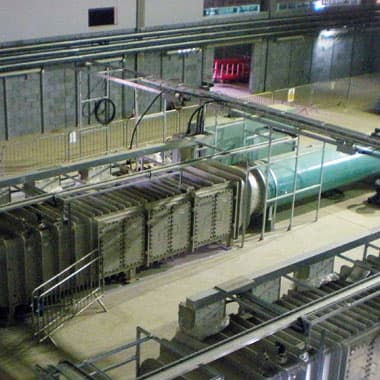
PWN Water Supply Company, North Holland is currently operating a TrojanUVSwiftECT UV advanced oxidation system to treat pesticides at their plant in Andijk, the Netherlands. In addition, the system inactivates microorganisms such as the spores of sulfite-reducing clostridia (SSRC), Cryptosporidium and Giardia. The drinking water treatment plant serves approximately half a million people and can treat up to 4,000 cubic meters per hour (or approximately 25 million gallons per day).
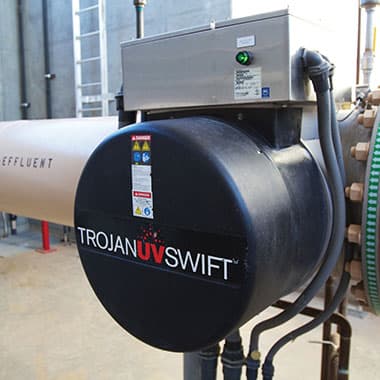
TrojanUV Systems for Pesticide Treatment
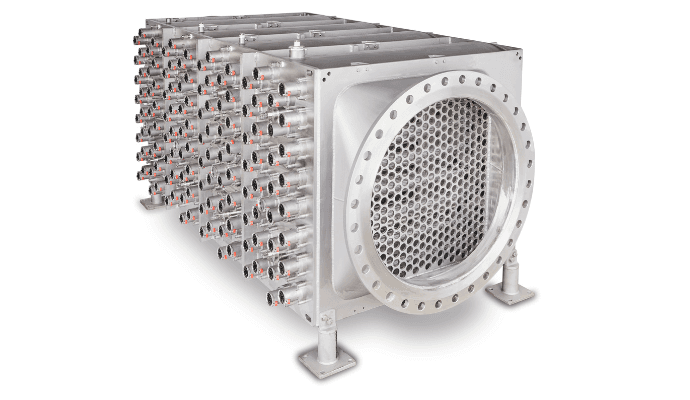
TrojanUVFlexAOP
An advanced oxidation system designed to treat contaminants in potable reuse and drinking water remediation applications to provide high quality drinking water.
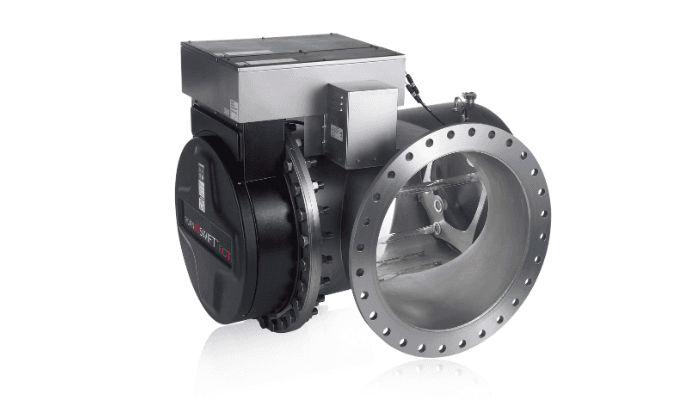
TrojanUVSwiftECT
An advanced oxidation system that treats drinking water and has the capability to provide simultaneous treatment for seasonal taste and odor events, when required.