

Quick Facts About 1,4-dioxane
When released into the air, 1,4-dioxane degrades relatively quickly, but it is slow to degrade in water and soil, so it can remain in groundwater if not treated
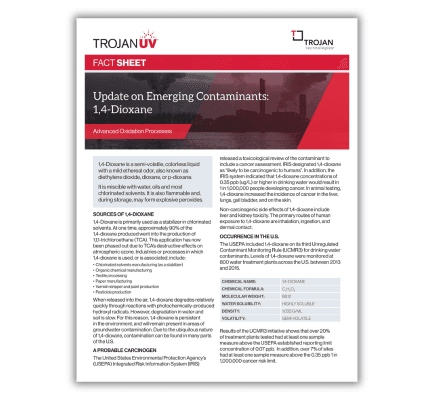
The United States Environmental Protection Agency’s (USEPA) has designated 1,4-dioxane as “likely to be carcinogenic to humans”
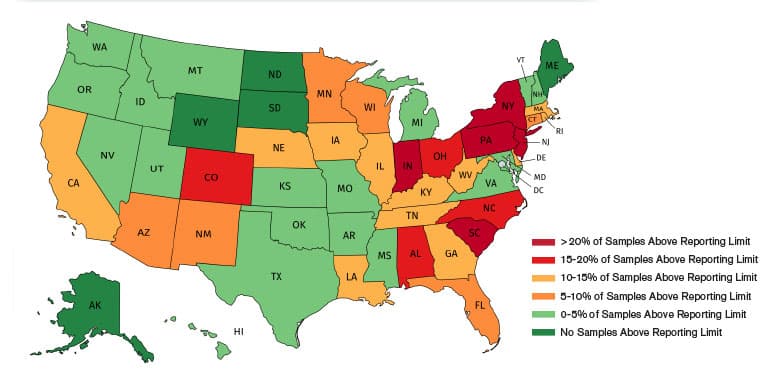
1,4-dioxane contamination has been found in the United States, especially in highly industrialized regions
The USEPA monitored 1,4-dioxane levels at 800 water treatment plants across the United States between 2013 and 2015. Results showed that over 20% of treatment plants tested had at least one sample measure above the USEPA established reporting limit concentration of 0.07 ppb.
Treatment of Groundwater Contaminated With 1,4-dioxane in Tucson, Arizona
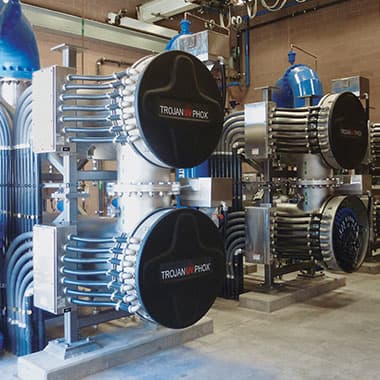
The Tucson International Airport Area Superfund Site is located in Pima County, Arizona. As early as 1942, metals, chemicals and other wastes were disposed of in the region, which led to aquifer contamination. The Tucson Airport Remediation Project (TARP) commissioned a groundwater treatment system, however, continued monitoring detected 1,4-dioxane which could not be easily removed with their air-stripping system. As a result the TrojanUVPhox® system was installed in the water treatment facility immediately adjacent to the TARP.
Treatment of NDMA & 1,4-dioxane in San Gabriel Valley, California
Since it was first settled in 1841, California’s San Gabriel Valley, east of Los Angeles, has hosted a wide variety of industries which contaminated much of its groundwater. When the contamination was discovered, five new groundwater treatment facilities were built, all selecting UV AOP for the treatment of NDMA and 1,4-dioxane. For these contaminants, UV AOP was the only practical and proven solution.
Successful Piloting of UV Advanced Oxidation on Long Island for 1,4-dioxane Treatment
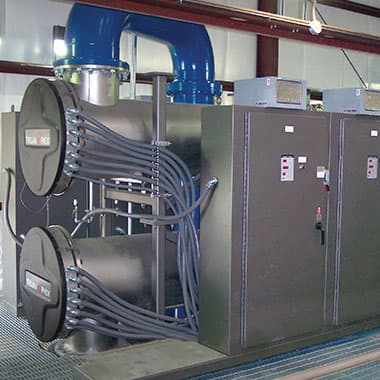
The New York State Department of Health has recognized UV AOP as a treatment solution for 1,4-dioxane. Thus water providers located in Nassau County on Long Island, it was necessary to pilot UV AOP technology at the various wells requiring treatment in order to confirm treatment efficacy and obtain state approval. The Bethpage Water District was the first water provider in Nassau County to successfully pilot and install full scale UV AOP using the TrojanUVPhox (R) at its Plant #6 well site.
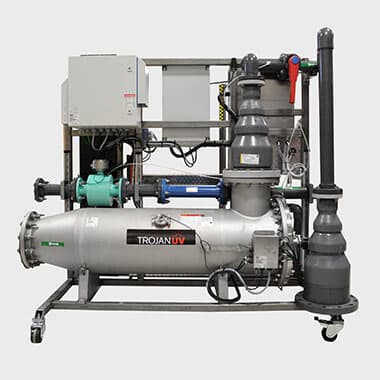
TrojanUV Systems for 1,4-dioxane Treatment
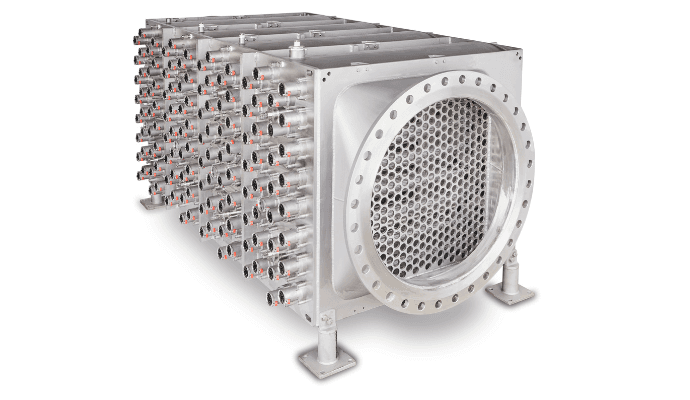
TrojanUVFlexAOP
An advanced oxidation system designed to treat contaminants in potable reuse and drinking water remediation applications to provide high quality drinking water.